Destinations
Why Did Tourist Arrivals in Bohol Drop 59% in 2026? What the Numbers Really Tell Us
170,016 arrivals in the first quarter of 2026 against 417,142 a year earlier: here is what these partial figures say, and do not say, about tourism in Bohol.
13 September 2026 · 11 min read
Bohol is not just the Chocolate Hills, the tarsiers, Balicasag and Alona Beach. I say this often, and it sits at the heart of what the 2026 figures are actually telling us.
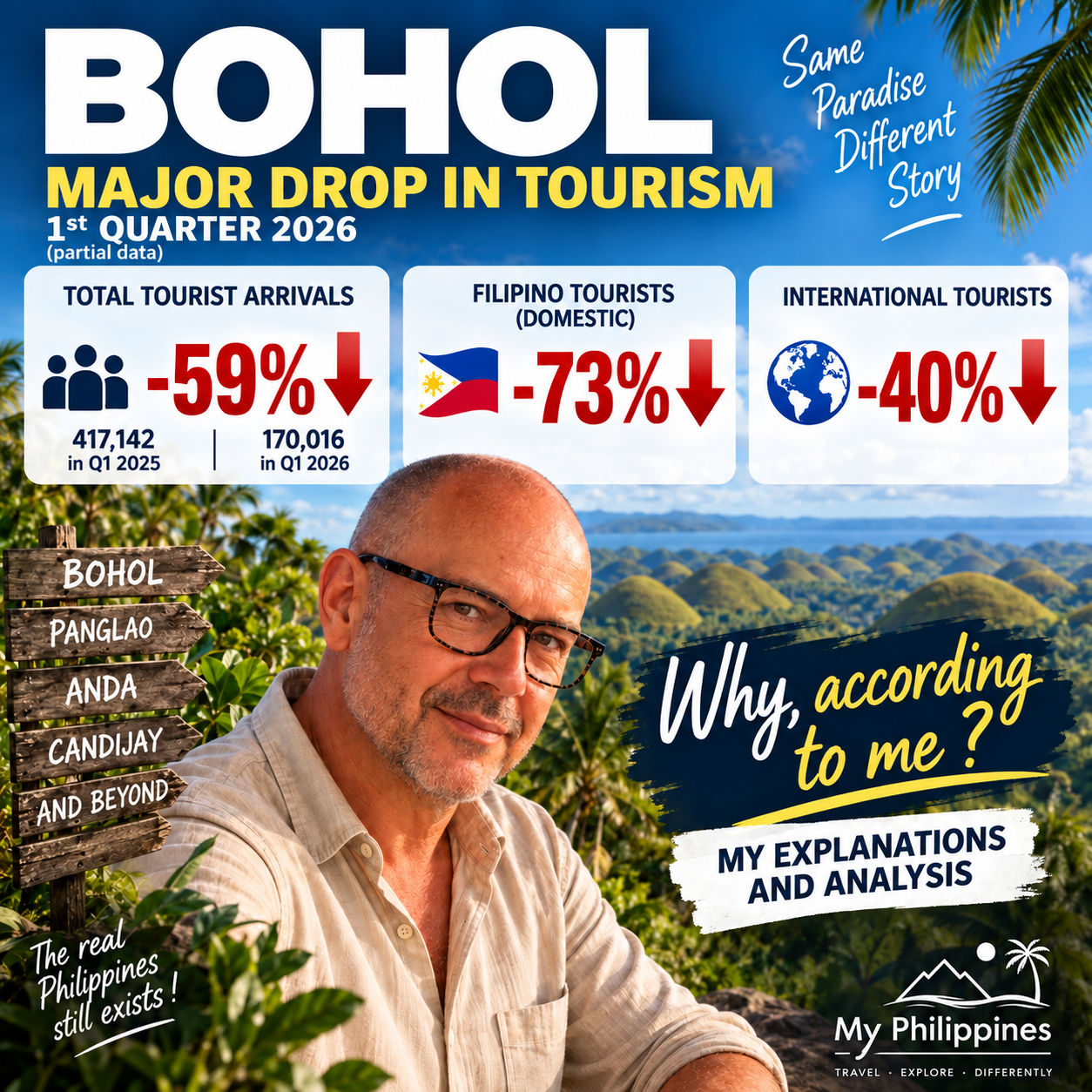
In the first quarter of 2026 the province recorded 170,016 visitor arrivals, against 417,142 in the same period of 2025, a drop of roughly 59%. Domestic arrivals fell by about 73% and foreign arrivals by about 40%. The data comes from the Regional Economic Situationer of DEPDev for Central Visayas, reported by The Freeman / Philstar and SunStar Cebu.
First caveat: these figures are incomplete
Before any interpretation, a warning that comes from the source itself: regional planners attribute part of the decline to incomplete reporting. In other words, not every establishment filed its statistics for the quarter.
A partial figure is not a false figure, but it should not be read as a final one. A 59% fall in a single quarter, in a province that had passed a million annual arrivals, is a strong signal rather than an exact measurement of a collapse.
My reading: the trend is real, the exact magnitude still has to be confirmed.
What we can say, and what we cannot
We cannot pin the 40% drop in foreign arrivals on European or American travellers. The 2026 breakdown by nationality is not detailed enough publicly to quantify the contribution of each market.
What we do know is the historical weight of the Korean market. Korean arrivals in Bohol went from 136,397 in 2023 to 233,280 in 2024, then fell by roughly 30% in 2025 according to the Bohol Chronicle. The provincial tourism council linked that drop to security concerns and travel costs, as reported by BusinessWorld.
When a market that filled a large share of direct flights and hotel nights contracts, the mechanics are simple: fewer seats sold, fewer viable routes, fewer routes and therefore fewer arrivals. But that is where I stop. Saying "Koreans account for X% of the 2026 decline" would mean inventing a number.
The domestic drop is the real signal
The most striking part of the quarter is not the international side, it is the domestic one: around -73%.
Filipinos are Bohol's first market. They fill the weekends, the long holidays, the school breaks, the mid-range resorts and the family-run pensions. When that market pulls back this sharply, it is no longer a question of international flights or overseas reputation: it is a question of price, perception and alternatives.
A traveller from Cebu or Manila compares. And today Bohol is compared with Siargao, Camiguin and Coron, places where they feel they get more for their money.
Panglao and Alona: the value-for-money problem
What follows is my personal observation as a resident, not a statistic.
A two-bedroom house I was following went from roughly 20,000 to 30,000 PHP a month over a few years. At the Tagbilaran market I buy mangoes at around 90 PHP per kilo; in the Alona area I have seen them priced at around 200 PHP per kilo. Same fruit, twenty minutes apart.
On the accommodation side, Oceanica Resort Panglao, formerly South Palms, which I knew at around 75 to 100 EUR a night, is now frequently seen at around 12,000 to 15,000 PHP depending on dates. These are observed rates, they vary, and they are not guaranteed prices.
Panglao's problem isn't just that prices went up. It's that value didn't keep up.
A busier beach, more expensive restaurants, service that has not improved at the same pace as the rates: Filipino and foreign travellers alike do that arithmetic very quickly.
Whale sharks: one attraction less
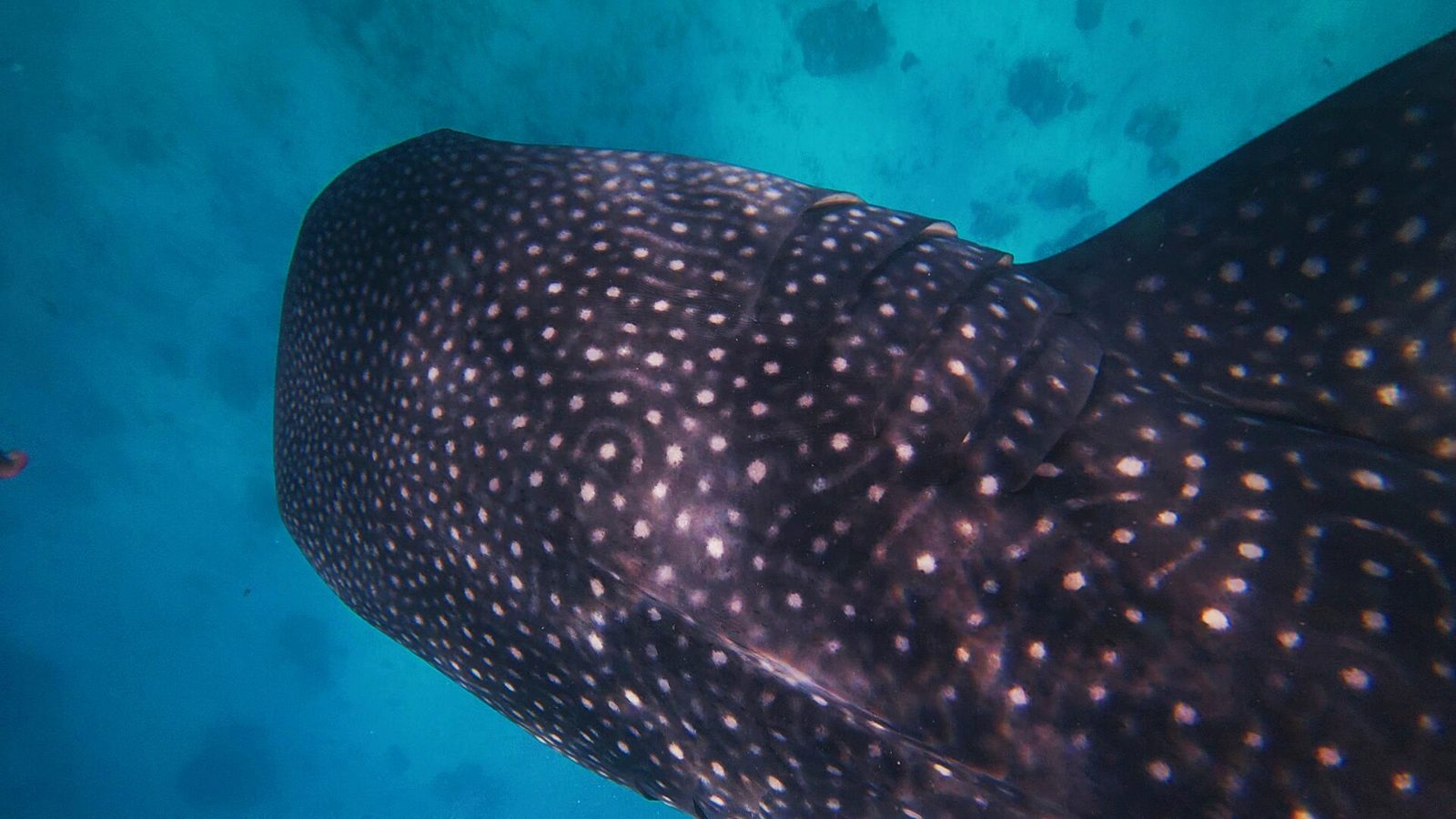
In February 2025, Governor Erico Aristotle Aumentado signed Executive Order No. 10 ordering the immediate cessation of whale shark interaction activities in the towns of Lila, Alburquerque and Dauis. The measure targeted the feeding of the animals and what environmental advocates called fake ecotourism. Sources: Philippine Information Agency and Bohol Island News.
On principle I support the conservation logic. Commercially, however, Bohol removed an activity that had become a selling point without immediately replacing it with an experience just as easy for agencies and travellers to understand.
Oslob: competition that did not go away
In Cebu, Oslob still hosts whale shark interactions, in a setting that is itself heavily debated by scientists because of the feeding. Travellers who absolutely want to swim with a whale shark therefore still have an option, a few hours from Bohol.
I have no data showing how many visitors shifted from Lila to Oslob. It is a plausible transfer, not a measured fact.
Transport, fares and perception
Another factor is less visible in the statistics but very present in local conversations: the perception of costs on arrival. In 2025 the Bureau of Customs received complaints from Korean tourists at Bohol-Panglao International Airport, with an investigation announced into fare abuse, as reported by the Bohol Tribune.
In May 2026 the provincial tourism council pointed to rising travel costs and disruptions on some air routes among the causes of the drop in arrivals (PIA).
A destination does not only lose visitors because it is expensive. It loses them when travellers feel they are a pricing target from the moment they step out of the airport.
What Bohol is already doing
The province has not stood still: travel expos, discounted resort rates, new promotional programmes (Bohol Tribune), and a web app launched with DOST and BISU to connect visitors with verified providers and capture arrival data (Newsbytes.PH).
All useful. But promoting the same product harder does not fix a perceived-value problem.
The Bohol nobody sells enough
This brings me back to where I started. For fifteen years the island has been sold as essentially one circuit: Chocolate Hills, tarsiers, Loboc, Balicasag, Alona. Four or five boxes to tick, on an island that holds far more.
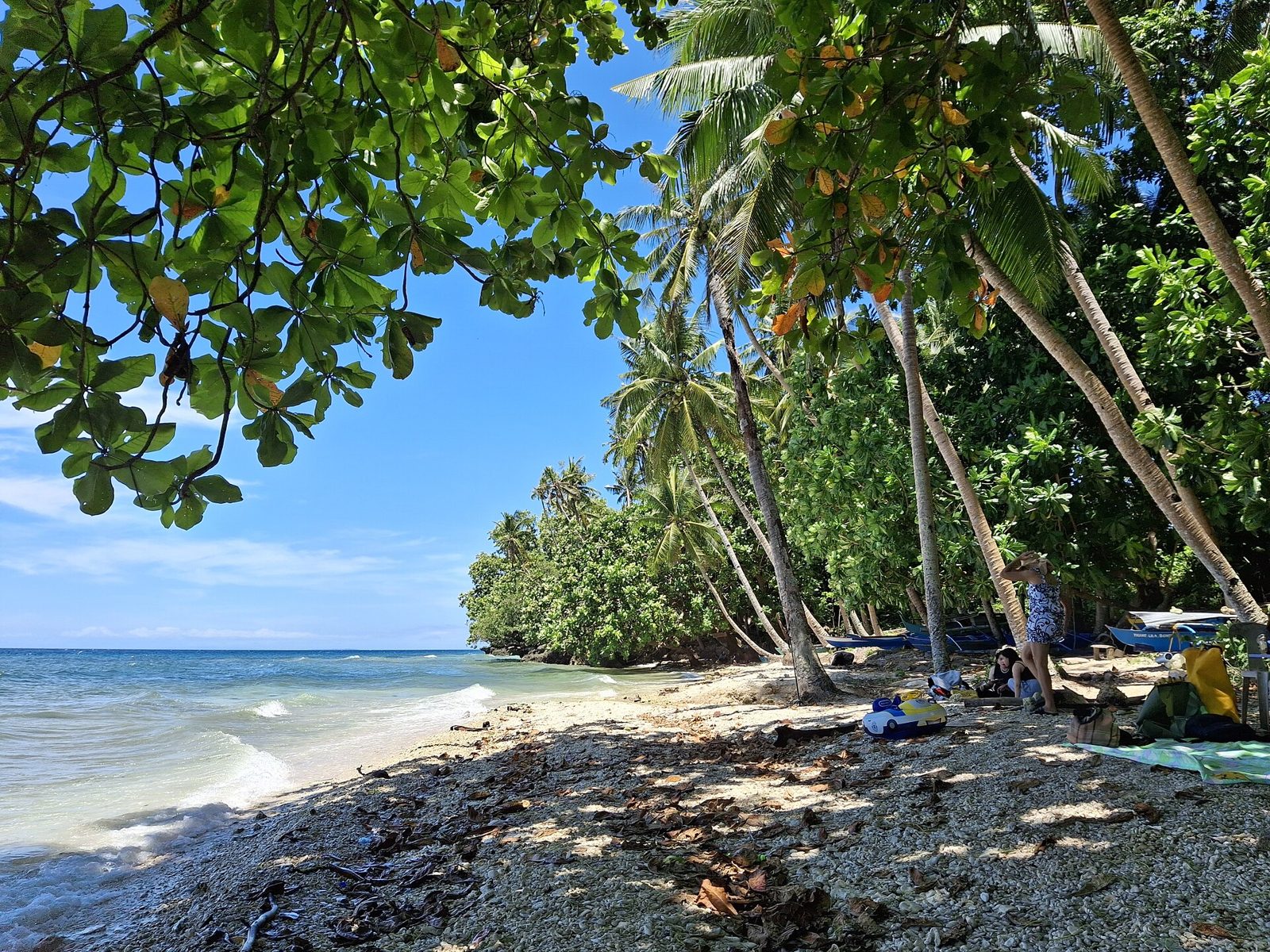
- Anda, on the east coast, with white-sand beaches that stay almost empty on weekdays and natural pools carved into the rock;
- Candijay and the hinterland, Can-umantad Falls, rice terraces, villages where nobody is selling you anything;
- Pamilacan, for cetacean watching from bancas run by former hunters turned guides;
- the whole east coast, from Guindulman to Ubay, where accommodation still costs a fraction of Panglao;
- the interior, between Sierra Bullones and Bilar, for anyone who enjoys a motorbike and forest roads.
I cover these areas in my Bohol guide, and you can locate them on the interactive map.
Conclusion
The first-quarter 2026 figures are partial, and consolidated data is needed before drawing a definitive curve. But the direction is clear, and the 73% domestic drop deserves more attention than the foreign one.
Bohol's problem may not be that tourists no longer want to come to Bohol. The problem may be that they no longer want to buy the Bohol that has been sold to them for the past fifteen years.
Frequently asked questions
- How much did tourism in Bohol drop in 2026?
- In the first quarter of 2026 Bohol recorded 170,016 arrivals against 417,142 in the first quarter of 2025, about -59%. The data comes from the DEPDev Regional Economic Situationer and is presented as partial, with some of the decline attributed to incomplete reporting.
- Is the decline mainly about foreign visitors?
- No. Domestic arrivals fell by around 73% and foreign arrivals by around 40%. The contraction of the Filipino market is the most important signal of the quarter.
- Have European tourists abandoned Bohol?
- Nothing supports that claim. The 2026 breakdown by nationality is not detailed enough to attribute the 40% drop to a specific market. What is known is that the historically strong Korean market has been declining since 2025.
- Can you still swim with whale sharks in Bohol?
- Not in Lila, Alburquerque or Dauis: Executive Order No. 10 of February 2025 stopped whale shark interactions in those three towns. The activity still runs in Oslob, Cebu, in a setting that is also criticised because of the feeding.
- Has Panglao become too expensive?
- Prices have clearly risen, for accommodation as well as restaurants and everyday goods. The real issue is not the price level itself but the gap between what you pay and what you get compared with other Philippine destinations.
- Should you avoid Bohol in 2026?
- No. Bohol remains one of the most complete provinces in the country. You simply need to build the trip differently: less time on the classic Panglao-Chocolate Hills circuit, more time in Anda, Candijay, Pamilacan and the interior.
Want this applied to your own trip?
Score your itinerary for free with Filiscore: islands, season, transfers and wasted days.
Score my itinerary