Itineraries
Philippines itinerary for 15 days: how many islands should you really visit?
Planning a 15-day Philippines itinerary? Here is how many islands to actually visit, how many nights to plan per stop, and how to avoid losing your holiday to transfers.
2 September 2026 · 8 min read
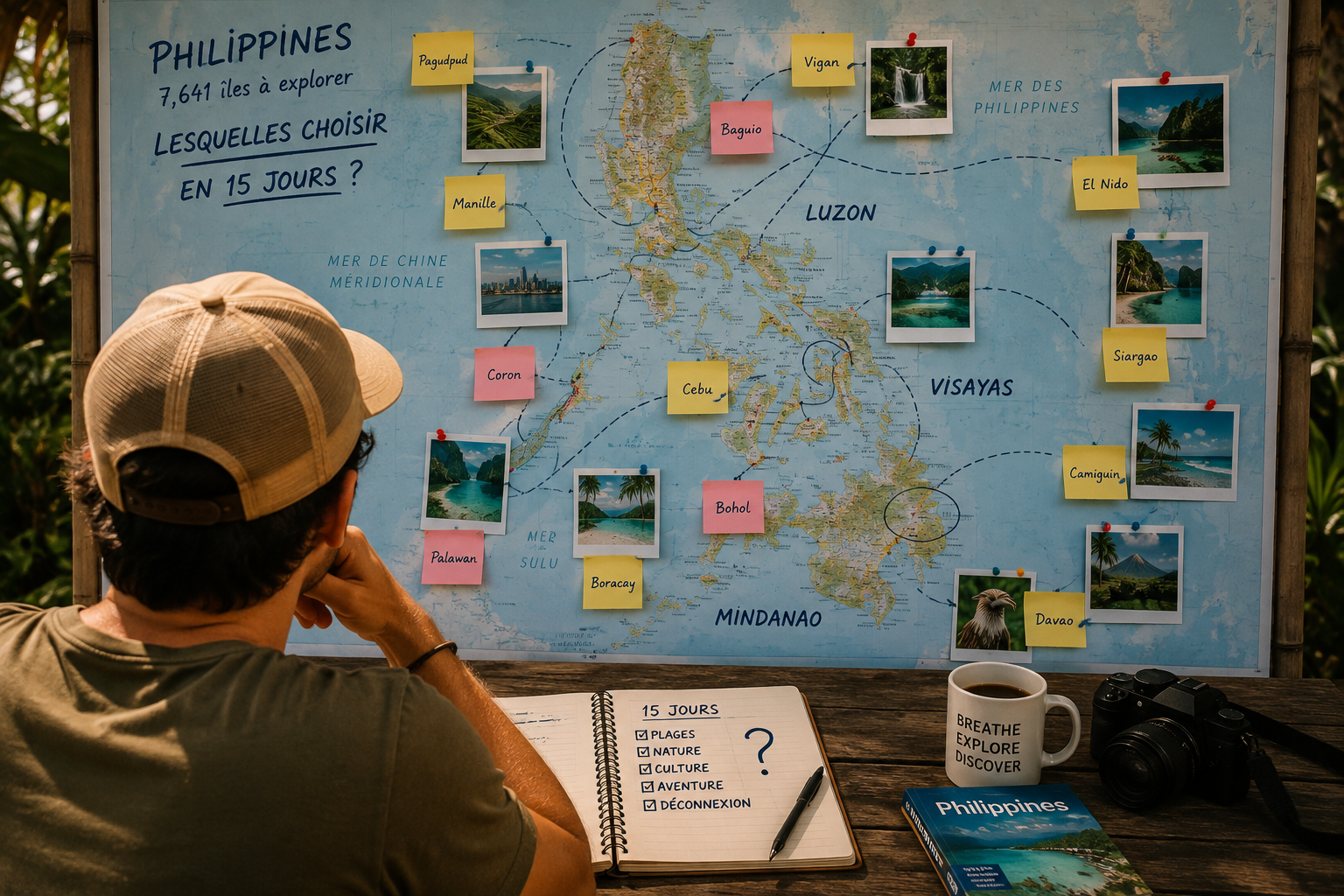
Planning a 15-day itinerary in the Philippines looks simple: pick the most beautiful islands, place them on a map and book the transport. That is exactly where many travellers go wrong.
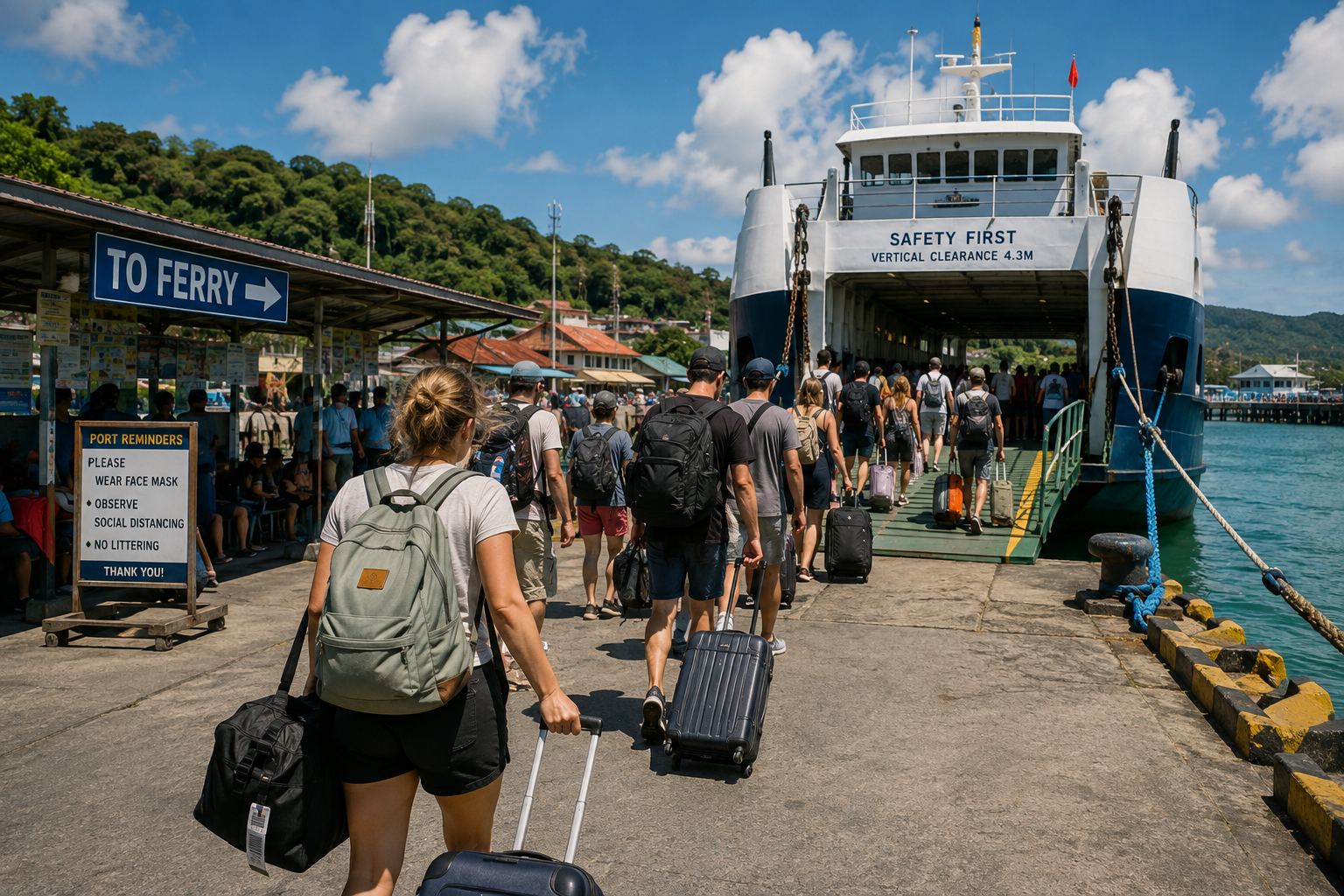
In the Philippines, a transfer day is almost never just one hour of ferry or flight. You have to add the ride to the port or airport, the waiting time, possible delays, then the transfer to the new hotel. Changing island easily costs half a day, sometimes a full one.
So the real question is not “How many islands can I visit in 15 days?” but “How many islands still let me enjoy the trip?”
The short answer: 3 stops is ideal
For a 15-day trip, three main destinations are usually the best balance. It allows three to four nights per stop, limits wasted days and keeps a margin for delays or bad weather.
Four stops remain possible if they follow each other logically and the connections are reliable. From five onwards the itinerary usually becomes too heavy. Six islands or more often turns the trip into a sequence of check-ins, check-outs, vans, ports and airports.
What changing island really costs
A transfer is not limited to its official duration. A ferry advertised at two hours can take up most of the day. A one-hour domestic flight can mean several hours door to door, as explained in our guide to domestic flights and ferries.
Before adding a destination, always add up:
- the ride between the hotel and the port or airport;
- the check-in buffer and waiting time;
- the ferry or the flight;
- baggage collection;
- the final ride to the new accommodation.
Door-to-door time is what matters, not the time printed on the ticket.
Three destinations in 15 days: the best balance
With three stops you can genuinely discover each destination: boat tours, beaches, snorkelling, land trips, a free day and some rest. You do not depend on a minute-perfect plan and you keep a safety margin.
In most cases plan at least three nights per destination. Four nights are far more comfortable, especially when a stop has several excursions or takes a long journey to reach. Also consider the cost side: our realistic two-week budget gives reliable figures.
Four destinations: possible, but only with a coherent route
Four stops can work when the connections follow naturally. The issue is not only the number of islands: it is their geographical order.
Avoid back-and-forth routes and combinations picked only because each place is famous on Instagram. Two beautiful destinations can be a bad pairing if the link forces you back through Cebu or Manila.
Before confirming four stops, check the real schedules, the frequency of connections, the operating days and the door-to-door duration. A quick test with FILISCORE immediately shows whether the sequence holds up.

Five islands or more: technically feasible, rarely wise
Yes, it is technically possible to visit five or six islands in fifteen days. But “feasible” does not mean “enjoyable”.
A poorly optimised itinerary can hold six islands, five days absorbed by transfers and only ten days actually on location. A well-built itinerary aims at three to four islands, around two transfer days in total and up to thirteen days to enjoy.
The goal of a trip is not to win a competition for the highest island count.
Five rules for building a good itinerary
- 1. Stay at least three nights per stop, ideally four.
- 2. Calculate every transfer door to door.
- 3. Avoid loops back through Cebu or Manila when a logical progression exists.
- 4. Book domestic flights early, ideally around 60 days before departure, taking into account the best time to visit month by month.
- 5. Keep a buffer before your international return flight.
The most common mistake
Most travellers first choose their favourite islands, then try to connect them. It should be the opposite: build a coherent route, then select the best destinations reachable along that route.
Do not choose your islands only because they are beautiful. Choose them also for the time you will spend there and how easy they are to reach. The free MY PHILIPPINES magazine (in French) walks through this method step by step.
Have your itinerary checked for free
Before booking, use FILISCORE, the free tool from MyPhilippines.fr. It analyses the number of islands, the nights per stop, the coherence of the route, the travel season and the weight of transfers.
In fifteen days, three well-chosen stops will almost always give you a better trip than six destinations rushed through. In the Philippines, itinerary quality does not come from the number of islands: it comes from coherent transfers and the time actually spent on the ground.
Want this applied to your own trip?
Score your itinerary for free with Filiscore: islands, season, transfers and wasted days.
Score my itinerary